Tuesday, 23 September 2008

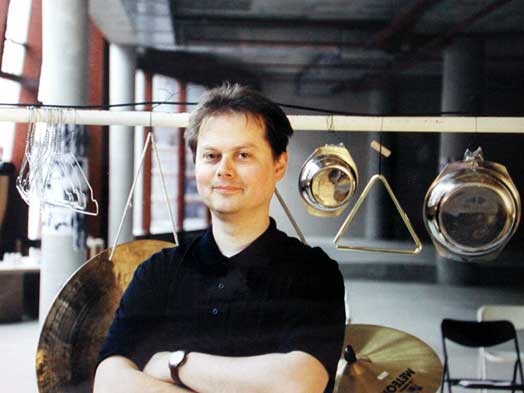
Ausgeh-Tipp : Ensemble Modern spielt Stockhausen in Frankfurt am 23.09.2008

Im August 2008 wäre Karlheinz Stockhausen (1928 - 2007) 80 Jahre alt geworden. Heute abend huldigt das Ensemble Modern den Komponisten mit einer Aufführung seines Stückes MANTRA für 2 Klaviere und Elektronik aus dem Jahr 1970.

Alte Oper
Frankfurt am Main
23.09.2008, 20:30 Uhr

Moderation: Dr. Bernd Leukert
Klangregie: Felix Dreher
Solisten: Hermann Kretzschmar und Ueli Wiget
Gast: Prof. emer. Alfons Kontarsky

Links:
Ensemble Modern - Tourneeplan auf Homepage
Stockhausen Veranstaltungsreihe in Köln - zum 80.ten
Stockhausen Bio - Wikipediea

Sunday, 21 September 2008

I write poetry, because... (Allen Ginsberg)

Well, the following really puts it into a nutshell.
I guess I can underwrite this:

"I write poetry because I want to be alone and want to talk to people."
- Allen Ginsberg (from "Improvisation in Beijing", the preface to Cosmopolitan Greetings. Poems 1986-1992, Penguin, 1994, page xiv)

Wednesday, 17 September 2008

The "Pop" or American Haiku (Jack Kerouac)

"The American Haiku is not exactly the Japanese
Haiku. The Japanese Haiku is strictly disciplined
to seventeen syllables but since the language
structure is different I don't think American
Haikus (short three-line poems intended to be
completely packed with Void of Whole) should worry
about syllables because American speech is
something again...bursting to pop.

Above all, a Haiku must be very simple and free
of all poetic trickery and make a little picture
and yet be as airy and graceful as a Vivaldi
Pastorella." - Jack Kerouac, American Haiku (1959)


Thunder in the mountains -
the iron
Of my mother's love
- from Desolation Angels (novel, published 1965)


Arms folded
to the moon,
Among the cows.
- from: Book of Haiku (1968)


A quiet Autumn night
and these fools
Are starting to argue


In Haikkaido a cat
has no luck


Every cat in Kyoto
can see through the fog.


In London-town cats
can sleep
In the butcher's doorway.
- from The Northport Haiku (1964)


Early morning yellow flowers,
thinking about
the drunkards of Mexico


No telegram today
only more leaves
fell.


Holding up my
purring cat to the moon
I sighed.


Drunk as a hoot owl,
writing letters
by thunderstorm.
- from American Haiku (1959)


More examples of Kerouac's haikus can be found under:
Haikus by Jack Kerouac.

More about Kerouac and haiku under:
Pop! The Jack Kerouac Haiku Page

On Writing (Kerouac)

"Always considered writing my duty on earth."
- Jack Kerouac (1922 - 1969)

(from: Atop an Underwood. Early Stories and Other Writings (1936-1943), page vii, Viking, 1999, edited by Paul Marion)


"You, man must write exactly as everything rushes into your head and AT ONCE. The pain of writing is just that..."
- Jack Kerouac, letter to Neal Cassidy, 6 October, 1950

Quotationspage - Jack Kerouac

On the free flowing prose method of writing (Jack Kerouac)

It was at about the time that Kerouac wrote The Subterraneans that he was approached by Allen Ginsberg and others to formally explicate exactly how he wrote it, how he did Spontaneous Prose. Among the writings he set down specifically about his Spontaneous Prose method, the most concise would be Belief and Technique for Modern Prose, a list of thirty "essentials."

1. Scribbled secret notebooks, and wild typewritten pages, for your own joy
2. Submissive to everything, open, listening
3. Try never get drunk outside your own house
4. Be in love with your life
5. Something that you feel will find its own form
6. Be crazy dumbsaint of the mind
7. Blow as deep as you want to blow
8. Write what you want bottomless from bottom of the mind
9. The unspeakable visions of the individual
10. No time for poetry but exactly what is
11. Visionary tics shivering in the chest
12. In tranced fixation dreaming upon object before you
13. Remove literary, grammatical and syntactical inhibition
14. Like Proust be an old teahead of time
15. Telling the true story of the world in interior monolog
16. The jewel center of interest is the eye within the eye
17. Write in recollection and amazement for yrself
18. Work from pithy middle eye out, swimming in language sea
19. Accept loss forever
20. Believe in the holy contour of life
21. Struggle to sketch the flow that already exists intact in mind
22. Don't think of words when you stop but to see picture better
23. Keep track of every day the date emblazoned in yr morning
24. No fear or shame in the dignity of yr experience, language & knowledge
25. Write for the world to read and see yr exact pictures of it
26. Bookmovie is the movie in words, the visual American form
27. In praise of Character in the Bleak inhuman Loneliness
28. Composing wild, undisciplined, pure, coming in from under, crazier the better
29. You're a Genius all the time
30. Writer-Director of Earthly movies Sponsored & Angeled in Heaven

Some believed that at times Kerouac's writing technique did not produce lively or energetic prose. Truman Capote famously said about Kerouac's work, "That's not writing, it's typing." Despite such criticism, it should be kept in mind that what Kerouac said about writing and how he wrote are sometimes seen to be separate. According to Carolyn Cassady and other people who knew him he rewrote and rewrote. Some claim his own style was in no way spontaneous. However it should be taken into account that throughout most of the '50s, Kerouac was constantly trying to have his work published, and consequently he often revised and re-arranged manuscripts in an often futile attempt to interest publishers, as is clearly documented in his collected letters (which are in themselves wonderful examples of his style). The Subterraneans and Visions of Cody are possibly the best examples of Kerouac's free-flowing spontaneous prose method.

The above is part of a nicely done article under: Jack Kerouac - Wikipedia biography.

See also the following entries, where examples of spontaneous prose style are presented and elaborated:
The Subterraneans - Wikipedia entry,
Visions of Cody - Wikipedia entry.

Definition of a Poet (Jack Kerouac)

DEFINITION OF A POET (1941)

A poet is a fellow who
spends his time thinking
about what it is that's
wrong, and although he
knows he can never quite
find out what this wrong
is, he goes right on
thinking it out and writing
it down.
A poet is a blind optimist.
The world is against him for
many reasons. But the
poet persists. He believes
that he is on the right track,
no matter what any of his
fellow men say. In his
eternal search for truth, the
poet is alone.
He tries to be timeless in a
society built on time.

- Jack Keroauc (1922 - 1969.
Full name: Jean Louis Lebris de Kerouac.)

From: Atop an Underwood. Early Stories and Other Writings (1936-1943), page 122, Viking, 1999, edited, introduced and with commentary by Paul Marion.

Here's an excerpt from Paul Marion's introductory comments to the above poem, taken from page 121 of Atop an Underwood:

"To Kerouac, the poet was the ideal, the highest form of a writer, the artist-writer, of whom he wrote:
"Their use lies in being able to erect structures of thought for mankind."
He described Whitmaman as his "first real influence" and the reason he decided to hit the American road.

Young Kerouac experimented with poetry in all forms, but traditional verse forms did not suit him. In 1940 he explained why:
"I feel that the words are put backwards. I'd rather have simple prose-poetry, to the point, concise, and more digestible. Outside of that, poetry is sublime. Poets are happy people,because they too are sublime."
He later added a few original forms to the array of poetic forms, including the "pop", a three-line American or Western haiku without syllable restrictions, and the "blues", which he defined as "a complete poem filling in one notebook page, of small or medium size, usually in 15-to-25 lines, known as a Chorus, i.e., 223rd Chorus of Mexico City Blues in the Book of Blues."

Further stuff, by and about Kerouac, under:
audio files - Jack Keroauc recites, etc..
Dharma Beat.
Kerouac Alley.
Jack Kerouac - Wikipedia biography.

German links:
Kerouac - Encarta Biographie,
Kerouac - Wikipedia Biographie,
Kerouac - Lonesome Traveller Biographie.

Tuesday, 9 September 2008

Torturing The Canvas (Tanka)

Here's another excerpt from the forthcoming haiga book project:

There's no looking back
Once you've taken your first breath –
No risks, equals no
Discoveries – no increase
In perception: stagnation

© 2008 George H.E. Koehler

For more excerpts from the forthcoming book, check out the following link:Rektozhan on deviantART

The Poet's Vitriolic Pen (Tanka)

Here's another excerpt from the forthcoming book titled POEMS YOU SEE BEFORE YOU DIE, a collaboration between George Koehler and Ray Rubeque.

The following tanka of mine is part of a haiga, the corresponding illustration (not shown here) was created by Ray Rubeque.

There'll be no painting
With words anymore from me:
Where arts are prone to
Be deep-fried in hate, only
A flame-thrower tongue will do

© 2008 George H. E. Koehler

For more excerpts from the forthcoming book, check out the following link: Rektozhan on deviantART

Monday, 8 September 2008

Notes by the Way (Combining alignment with disjointure)

Combining alignment with disjointure in free improvisation:

The first instalment (Series #1) of recordings from the UglyBeautyCage Archives has been posted under www.archives.org. Check it out! You can download all these great tracks from UglyBeautyCage Archives - Series No. 1.

These 4 spontaneous compositions came into existence as the fruits of unrehearsed playing and spontaneous improvisation by the duo of Ralph Lichtensteiger and George Koehler, on Nov 21, 1999.

They are part of a larger blizzard of hardcore dada that evolved during a series of rehearsals, to investigate and develop material for our UglyBeautyCage project, and in preparation for two concerts in Frankfurt which were held on March 31 and April 1, 2000. There are no overdubs on these recordings.

Beginning To Feel Constructed:


Instruments used: electric guitar, MiniDisk player (scratching), prepared piano corpus

Dialogue 1:


Instruments used: electric guitar, bowed electric bass, flute, harmonica, MiniDisk player (scratching), prepared piano corpus

Dialogue 2:


Instruments used: electric guitar, electric bass, violin, harmonica, flute, MiniDisk player (scratching), prepared piano corpus, voice

Plant Trouble:


Instruments used: voice, electric bass, electric guitar, MiniDisk player (scratching), prepared piano corpus


For a selection of live recordings from the Zeil 5 Concert, Frankfurt, as well as photo documentation of the concert preparations, see under:
Zeil 5 Concert (Live, 2000) 2CD package


Photo © Ralph Lichtensteiger


More sound investigations, that form a part of the overall UglyBeautyCage project, can be found under the following:
Dialogue with John Cage (one)
UglyBeautyCage - Audio-visual-semantic incubator (a collection of TEXTS USED)
Dialogue with John Cage (two)
101 Questions and Answers re John Cage
Study Pieces 2002 & 2003
From Here To Emptiness


For more recordings from musique trouvé, see under musique trouvé, all available CD's

Sunday, 7 September 2008

Notes By The Way (Interaction in Music)

"A captured moment of spontaneous creativity is worth more than a thousand hours of computerised perfection." - Louis Rey, 1997 (Liner notes to Led Zeppelin - BBC Sessions (March 1969 - April '71) 2CDs, issued 1997.)
Live interaction between musicians breathes life into the recordings of compositions - surely that's not REALLY difficult to grasp?

These days, considering the possibilities of increased control that modern studio facilities offer, it should be possible to easily combine the creative processes such as those of jazz musicians in the Sixties, so that the interpretation of compositions profits from interaction, i.e., one should record compositions in a live ensemble manner without overdubbing, just as if the group where in a concert situation, as opposed to recording each instrument separately, and arranging the tracks on tape or disc.

Overdubs are all very well, and particularly useful if you compose in this way, but making music together with others boils down to interaction, that's more important than perfectionism.

I feel that the fruit of a group effort will always be among the most interesting results of creating music. Only control freaks prefer to play by themselves. And remain alone. Which can become rather sad, since isolation easily increases egocentricity.

Making music with others remains one of the most incredible ways of communicating, sometimes you can't even say WHAT it is you've been communicating, since the most important things that occur often happen without words. I suppose a better term for this collaborative process could be communion, as opposed to communication.
© George H. E. Koehler

"Komponieren bedeutet erfinden, entdecken" (Stockhausen)

"Komponieren bedeutet erfinden, entdecken und wirklich seine eigene Sprache erneuern, und sich nie wiederholen. Das ist ja gar nicht mein Problem, wie viele jetzt sich für Stockhausen interessieren - das wichtige ist, ist das jedes Werk ein Kern-Werk ist." - Karlheinz Stockhausen


"Composing means inventing, discovering and really renewing one's own language, and never repeating oneself. It's not my problem at all, how many are now interested in Stockhausen - the important thing is that every opus be a core opus." - Karlheinz Stockhausen (translated by George Koehler)

Saturday, 30 August 2008

Poems You See Before You Die (Excerpts)

NEWS! The current collaboration between artist Ray Rubeque and poet George Koehler (both residents of Frankfurt on Main) on their joint haiga book project is nearing completion.
Publication of POEMS YOU SEE BEFORE BEFORE YOU DIE is drawing nearer and nearer!

Here some appetizers from the forthcoming book:


daily Resurrection by ~Rektozhan on deviantART
© 2008 Ray Rubeque

The above picture is an expansion of the following senryu poem:

As life slips away
Let us dance towards our next
Spring in the morning


© 2008 George Henry Etnea Koehler


Sigh of Relief by ~Rektozhan on deviantART
© 2008 Ray Rubeque

The above picture is an extension of the following tanka poem:

A warm breeze blowing
Shivers over the skin of
A pond, girls in bloom
Like May flowers, shaking off
The bleakness of winter's gloom


© 2008 George Henry Etnea Koehler

Look for more pictures and poems from the forthcoming book under Rektozhan on deviantART

Ray, my man, your pictures really do look good on the net, even if I say so myself! Good man! I'm really looking forward to seeing our book in print.

Check out Ray's further work under Ray's Art

Collapse of all Isms (Lichtensteiger)

© 2008 Ralph Lichtensteiger

Today I would like to draw your attention to COLLAPSE OF ALL ISMS, a new blog showcasing a selection of Ralph Lichtensteiger's paintings, in particular, from his remarkable THINGS series. These paintings were created with graphite and aluminium, amongst other materials.
Images of these relief paintings and assemblages from the Things series can be accessed under :
Collapse of all Isms - Paintings with acrylic, graphite, aluminium and found objects

To date the series encompasses 142 independent paintings. Apart from hanging them singly, the concept of this series additionally allows for a collective presentation in various groupings. They can be compiled to make up blocks of 4, 9, 16, 25 or 36 paintings, or as a horizontal chain at eye level, depending on conditions of the exhibition space.
© 2008 Ralph Lichtensteiger

"A pair of socks is no less suitable to make a painting with than wood, nails, turpentine, oil and fabric. A canvas is never empty." — Robert Rauschenberg
© 2008 Ralph Lichtensteiger

More images of Ralph's paintings under:
Slideshow - Things
Things paintings
More paintings, and drawings

Thursday, 19 June 2008

Death... in the middle of a meal (Désaugiers)

I pray that death may stroke me
In the middle of a large meal
I wish to be buried under the table cloth
Between four large dishes
And I desire that this short inscription
Should be found on my tombstone:
"HERE LIES THE FIRST POET
EVER TO DIE OF INDIGESTION"

- Marc-Antoine-Madeleine Désaugiers (November 17, 1772 – August 9, 1827)

Many poets suffer the fate of some of the poètes maudits - malnutrition. The author of "Maldoror", Léautremont, for instance, is said to have been so ignored, that he died of hunger.

Somehow, though, I don't think it was Désaugiers' wish to be sated for a change that, in the poem above, drove him to desire a stomach filled to bursting. He seems to have been quite successful in his day, irrespective of fact that the modern lexicographers have largely struck him from the annals of French cultural history.
He has become a part of the cuisine of specialists.

Perhaps the above excerpt is a pastiche from one of his librettos or plays, and thus simply in keeping with a character role?

I stumbled across the poem in a whimsical book on funeral customs and funeral recipes ("Death Warmed Over - Funeral Food, Rituals and Customs from Around the World" by Lisa Rogak, p. 1, Ten Speed Press, Berkeley and Toronto, 2004), otherwise I most likely would also have never heard of this will-o'-the-wisp of French letters.

Désaugiers was a french poet, composer, playwright, song-writer as well as being a member and one-time president (1811-1813) of the Parisian "Caveau moderne" chanson society (which existed from 1806-1817). He wrote the famous song "Paris à cinq heures du matin", which is still part of the canon of French chanson.

Links
M.-A.M. Désaugiers - biographical sketch

Paris à cinq heures du matin - lyrics

Paris à cinq heures du matin - available recording

Here's a piece of trivia I picked up on the www.musikmph.de/musical_scores website:

Franz Schubert (b. Vienna, 31 January 1797; d. Vienna, 19 November 1828) composed "Die Zwillingsbrüder", a Singspiel in one act, between 1818-19. The libretto was written by Georg Ernst von Hofmann, and was based on a farce entitled "Les deux Valentins" by the little-known French playwright Marc-Antoine-Madeleine Désaugiers.

Tuesday, 20 May 2008

Truth And Silence (Aldous Huxley)

"Great is truth, but still greater, from a practical point of view, is silence about truth. By simply not mentioning certain subjects... totalitarian propagandists have influenced opinion much more effectively than they could have by the most eloquent denunciations."

- Aldous Leonard Huxley

Links:
Aldous Huxley - biography

After Silence ... (Aldous Huxley)

"After silence that which comes nearest to expressing the inexpressable is music."

- From: "Music at Night", 1931, by Aldous Leonard Huxley, writer and critic (1894 - 1963)

Links:
Aldous Huxley - Biography

Further quotations - Cybernation Quotationcenter

Tuesday, 13 May 2008

Schriftsteller der vergangenen Zeit (Grillparzer)

"Warum ich Schriftsteller der vergangenen Zeit, wär' es auch der nächstvergangenen, denen aus den Zeitgenossen vorziehe, liegt auch mit darin: daß die Irrtümer jeder Vorzeit klar vor den Augen der Nachwelt daliegen und man sie mit historischem Auge betrachtet, ohne dadurch affiziert zu werden; die Gegenwart aber heftet sich mit so vielen Fäden an uns, daß selbst schon die Gewalt, die man anwendet, sich von ihren Irrtümern loszureißen, ein Zuviel von der andern Seite hervorbringen muß. – Es gibt keinen unparteiischen Beschauer seiner Zeit. (1822)"
- Franz Grillparzer (1791-1872); Aus: "Studien zur Litteratur" (um 1860)

Links:
Gutenberg Archiv (Dt) - Studien zur Litteratur, Grillparzer

Gutenberg Archiv (Dt) - Franz Grillparzer

Wohin die Deutsche Poesie Kommen Muß (Grillparzer)

"Wohin die deutsche Poesie kommen muß, wenn sie auf dem Wege fortgeht, den sie in der neuesten Zeit eingeschlagen hat, zeigt am deutlichsten die Art, wie sich – mit der Billigung des ganzen gelehrten Deutschlands – Baron Malsburg in der Vorrede zu seiner Übersetzung Calderons über die Bedeutung des: Lebens ein Traum; dann Hagen in seiner: Bedeutung der Nibelungen für jetzt und immer, über dieses so schätzenswerte Gedicht äußern. Beider Ansichten sind vollkommen ägyptisch. Wer wird wohl das Symbolische aller Kunst leugnen? Aber sie zu einer Hieroglyphenschrift machen, deren an sich gleichgültige Gestalten erst durch das Herausfinden eines praktisch nutzbaren Gehaltes einen eigentlichen Wert bekommen, heißt alle Kunst aufheben und in die Poesie die Prosa zurückführen, die bei ihrem Tausch von ägyptischem Grübelgeist gegen den vormaligen französischen Leichtsinn kaum etwas gewonnen haben dürfte. Das seh' ich alles ein und grüble doch auch! »Ich muß es eben entgelten,« sagt Aurelie, »daß ich eine Deutsche bin. Es ist das Unglück der Deutschen, daß sie über allem schwer werden und alles über ihnen schwer wird.« (1820)"

- Franz Grillparzer (15.1.1791 - 21.1.1872); Aus: "Studien zur Litteratur" (um 1860)

Gutenberg Archiv (Dt) - Studien zur Litteratur, Grillparzer

Der größte Feind der wahren Kunst (Grillparzer)

„Die sogenannte moralische Ansicht ist der größte Feind der wahren Kunst, da einer der Hauptvorzüge dieser letztern gerade darin besteht, daß man durch ihr Medium auch jene Seiten der menschlichen Natur genießen kann, welche das Moralgesetz mit Recht aus dem wirklichen Leben entfernt hält."
- Franz Seraphicus Grillparzer (1791-1872)

Link zur Auswahl seiner Texte: Gutenberg Archiv (Dt) - Franz Grillparzer

Das Überhandnehmen der Bücher (MacLeod und Nietzsche)

Im Roman "Jodeln und Juwelen" von Charlotte Macleod (Originaltitel: "The Gladstone Bag", 1989, dt. Ausgabe 2000) findet man auf Seite 51 folgenden Gedanken:
"Emma fragte sich, ob der zweifellos selbst ernannte Graf tatsächlich beabsichtigte, ein Buch zu schreiben. Aber warum eigentlich nicht? Das wollten fast alle Menschen, und allzu viele setzten ihre Absicht leider auch noch in die Tat um."


Nietzsche war da deutlicher:
"193. Drakonisches Gesetz gegen Schriftsteller. -
Man sollte einen Schriftsteller als einen Missethäter ansehen, der nur in den seltensten Fällen Freisprechung oder Begnadigung verdient: das wäre ein Mittel gegen das Ueberhandnehmen der Bücher."

- Friedrich Wilhelm Nietzsche, 1844-1900 (Eintrag Nr. 193, aus: Menschliches, Allzumenschliches - Ein Buch für freie Geister, 1878.)

Link:
Projekt Gutenberg (Dt) - Nietzsche, Aus der Seele der Künstler und Schriftsteller

Some Ideas On How To Overcome Writer's Block

What do you do when you're stuck in a rut? Here's how some working writers responded upon being asked how they cope with writer's block. Their tips can be found in Terry Bisson's May 13th, 2008 article "Writer's Block Moves" under www.writersdigest.com, as well as a wealth of other information and recommendations.

Here's the link: Writers's Digest - Getting Past Writer's Block

Check it out!

Sunday, 11 May 2008

LITERATURGESCHICHTE (Schopenhauer)

"Die LITERATURGESCHICHTE ist der Katalog eines Kabinets von Misgeburten (dessen specieller Katalog mich nicht interessirt). Schweinsleder ist der Spiritus, in dem sie sich am längsten halten. Die wenigen wohlgerathenen Geburten hat man nicht dort zu suchen: die sind AM LEBEN geblieben und man begegnet ihnen überall in der Welt." - Arthur Schopenhauer (1788-1860)

Aus: "Das Schopenhauer Einlesebuch, Ein ABC für die Jetztzeit", Gerd Haffmans (Hg.), Haffmans bei Zweitausendeins, 2006 (Seite 61). Ein schönes handliches Büchlein! Kaufen, und überall mitnehmen!
Dies ist eine aphoristische Auswahl aus dem 1966-1975 zuvor erschienenem Handschriftlichen Nachlaß in 5 Bände (Hg. Arthur Hübscher), Waldemar Kramer Verlag (Band III, Seite 177).

Das Buch fast zum Menschen geworden (Nietzsche)

"Das Buch fast zum Menschen geworden. - Jeden Schriftsteller überrascht es von Neuem, wie das Buch, sobald es sich von ihm gelöst hat, ein eigenes Leben für sich weiterlebt; es ist ihm zu Muthe, als wäre der eine Theil eines Insectes losgetrennt und gienge nun seinen eigenen Weg weiter. Vielleicht vergisst er es fast ganz, vielleicht erhebt er sich über die darin niedergelegten Ansichten, vielleicht selbst versteht er es nicht mehr und hat jene Schwingen verloren, auf denen er damals flog, als er jenes Buch aussann: währenddem sucht es sich seine Leser, entzündet Leben, beglückt, erschreckt, erzeugt neue Werke, wird die Seele von Vorsätzen und Handlungen - kurz: es lebt wie ein mit Geist und Seele ausgestattetes Wesen und ist doch kein Mensch. - Das glücklichste Loos hat der Autor gezogen, welcher, als alter Mann, sagen kann, dass Alles, was von lebenzeugenden, kräftigenden, erhebenden, aufklärenden Gedanken und Gefühlen in ihm war, in seinen Schriften noch fortlebe und dass er selber nur noch die graue Asche bedeute, während das Feuer überall hin gerettet und weiter getragen sei. - Erwägt man nun gar, dass jede Handlung eines Menschen, nicht nur ein Buch, auf irgend eine Art Anlass zu anderen Handlungen, Entschlüssen, Gedanken wird, dass Alles, was geschieht, unlösbar fest sich mit Allem, was geschehen wird, verknotet, so erkennt man die wirkliche Unsterblichkeit, die es giebt, die der Bewegung: was einmal bewegt hat, ist in dem Gesammtverbande alles Seienden, wie in einem Bernstein ein Insect, eingeschlossen und verewigt."

- Friedrich Wilhelm Nietzsche, 1844-1900 (Eintrag Nr. 208, aus: Menschliches, Allzumenschliches - Ein Buch für freie Geister, 1878.)

Link:
Projekt Gutenberg (Dt) - Nietzsche, Aus der Seele der Künstler und Schriftsteller

ANTHOLOGIEN, LEXIKA, SAMMLUNGEN (Schopenhauer)

"Soll man KOMPILATOREN NIE LESEN; sondern bloß aufschlagen der Citate wegen: das übrige ist Arschwisch." - Arthur Schopenhauer

Aus: "Das Schopenhauer Einlesebuch, Ein ABC für die Jetztzeit", Gerd Haffmans (Hg.), Haffmans bei Zweitausendeins, 2006 (Seite 59). Ein vergnügliches Büchlein! Sehr empfehlenswert! Kaufen, überall mitnehmen und daher stets zur Hand haben!
Das Bändlein ist eine aphoristische Auswahl aus dem 1966-1975 zuvor erschienenem Handschriftlichen Nachlaß in 5 Bände (Hg. Arthur Hübscher), Waldemar Kramer Verlag (Band III, Seite 15).

LESEN (Schopenhauer)

"LESEN heißt seine Gedanken von einem Andern am Gängelbande führen lassen. - Die allermeisten Bücher sind sind bloß gut zu zeigen, wieviele Irrwege es giebt und wie toll man sich verlaufen könnte, wenn man sich vom Andern leiten ließe." - Arthur Schopenhauer (1788-1860).

(Aus: Das Schopenhauer Einlesebuch, Ein ABC für die Jetztzeit (Hg. Gerd Haffmans), Haffmans bei Zweitausendeins, 2006 (Seite 59). Ein sehr vergnügliches Büchlein! Dieses ist eine aphoristische Auswahl aus dem zuvor erschienenem Handschriftlichen Nachlaß in 5 Bände (Hg. Arthur Hübscher), Waldemar Kramer Verlag 1966-1975 (Band III, Seite 38).

Friday, 9 May 2008

Adorno re. Dictating as Provisional Step in the Writing Process, Termed "Sacrificial Lamb" ...

Aphorism No. 135 – Lämmergeier.
[Sacrificial lamb., bearded vulture 'Gypaetus barbatus']

Dictating is not merely more comfortable, and is not merely a spur to the concentration, but has in addition an objective advantage. Dictation makes it possible for the author to slide into the position of the critic during the earliest phases of the production process. What one puts down is non-binding, provisional, mere material for reworking; once transcribed, however, it appears as something alienated and to a certain extent objective. One need not fear establishing anything, which ought not to remain, for one does not have to write: one takes responsibility by playing a practical joke on responsibility. The risk of formulation takes the harmless initial form of effortlessly presented memos, then work on something which already exists, so that one can no longer even perceive one’s own temerity. In view of the difficulty, which has increased to desperate levels, of any theoretical expression, such tricks are a blessing. They are a technical means of assistance of dialectical procedure, which makes statements, in order to take them back and nevertheless hold them fast. Thanks however are due to those who take dictation, when they flush out the author at the right moment through contradiction, irony, nervousness, impatience and lack of respect. They draw rage to themselves. This rage is channeled from the storehouse of the bad conscience, with which authors otherwise mistrust their own texts and which the author would be that much more stubborn about leaving in the presumably holy text. The emotional affect, which ungratefully turns against the burdensome helper, benevolently purifies the relation to the matter [Sache]. — Theodor W. Adorno

(Aphorism No. 135, taken from: "Minima Moralia. Reflections on a Damaged Life", 1951 by Theodor W. Adorno. Translation by Dennis Redmond.)

Link to English translation: Adorno Achives - Minima Moralia (Engl)

Adorno über Diktieren als unverbindliche Vorstufe des Schreibens, genannt "Lämmergeiern" ...

Lämmergeiern [135]

"Zu diktieren ist nicht bloß bequemer, spornt nicht bloß zur Konzentration an, sondern hat überdies einen sachlichen Vorzug. Das Diktat ermöglicht es dem Schriftsteller, sich in den frühesten Phasen des Produktionsprozesses in die Position des Kritikers hineinzumanövrieren. Was er da hinstellt, ist unverbindlich, vorläufig, bloßer Stoff zur Bearbeitung, tritt ihm jedoch zugleich, einmal transkribiert, als Entfremdetes und in gewissem Maße Objektives gegenüber. Er braucht sich gar nicht erst zu fürchten etwas festzulegen, was doch nicht stehenbliebe, denn er muß es ja nicht schreiben: aus Verantwortung spielt er dieser einen Schabernack. Das Risiko der Formulierung nimmt die harmlose Gestalt erst des ihm leichthin präsentierten Memorials, dann der Arbeit an einem schon Daseienden an, so daß er die eigene Verwegenheit gar nicht recht mehr wahrnimmt. Angesichts der ins Desperate angewachsenen Schwierigkeit einer jeglichen theoretischen Äußerung werden solche Tricks segensreich. Sie sind technische Hilfsmittel des dialektischen Verfahrens, das Aussagen macht, um sie zurückzunehmen und dennoch festzuhalten. Dank aber gebührt dem, der das Diktat aufnimmt, wenn er den Schriftsteller durch Widerspruch, Ironie, Nervosität, Ungeduld und Respektlosigkeit im rechten Augenblick aufscheucht. Er zieht Wut auf sich. Sie wird vom Vorrat des schlechten Gewissens abgezweigt, mit dem der Autor sonst dem eigenen Gebilde mißtraut und das ihn um so sturer in den vermeintlich heiligen Text sich verbeißen läßt. Der Affekt, der gegen den lästigen Helfer undankbar sich kehrt, reinigt wohltätig die Beziehung zur Sache." — Theodor W. Adorno

(Lämmergeiern - Eintrag, bzw. Aphorismus, Nr. 135, aus: "Minima Moralia. Reflexionen aus dem beschädigten Leben" (1951) von Theodor Wiesengrund Adorno.

Link:
T. W. Adorno - Minima Moralia (Dt)

Wednesday, 7 May 2008

Gary Indiana on Going Out of Print, Kinski and Out-of-Control Memoirs

Here's a review of Klaus Kinski's "ALL I NEED IS LOVE", that Gary Indiana (real name, Gary Hoisington) wrote in 1990. It's taken from his highly readable collection of essays and reviews "LET IT BLEED. ESSAYS 1985-1995), published by Serpent's Tail/High Risk Books, London and New York, in 1996. This anthology collects samples of his work for "Art in America", the "Village Voice" and "Artforum". Great stuff. Check it out!

"Going out of print is only the last in a long series of humiliations inflicted on most writers by most publisheing houses. Unless you are the most wildly popular public strumpet, or have written some vapid book about one, chances are your publisher - who, after all, is running a whorehouse, not a publich charity - believes he is doing you a huge favor to begin with. Of the thousands of writers he could pluck from obscurity, it's you whom he's decided to favor.

Naturally, it would be base ingratitude for you to expect anything more than chump change in return for one, two, three, sometimes four or five years of work. You think your publisher doesn't have an overhead? Who do you think you are, Belva Plain? Ads? Are crazy, ads? Why should he do anything for you? It's no surprise that dozens of good books go out of print every year, when their publishers manifest no real support for them in the first place. I know one writer whose five novels are widely regarded as ground-breaking, fascinating works; they're all out print. I know another whose two novels are universally considered plodding, mechanical, unreadable exercises in intellectual vanity; because of her enduring fame as a writer of jacket quotes and slender, precious meditations on contemporary aesthetics, her publisher has dutifully reissued the novels every few years for the past 20.

Arbitrary as it really is, authors naturally experience going out of print as a horrific form of judgement. Klaus Kinski, however, need feel no such qualm. All I need is love would certainlyhave given Belva Plain a run for her money, but Random House stopped shipping after 10 thousand copies, reportedly out of fear of libel suits. Kinski collected a hefty advance and, if his book's self-portrait is anything to go by, couldn't care less whether anybody gets to read it. It is an astonishing document that makes Errol Flynn's My Wicked, Wicked Ways and Hedy Lamarr's Ecstasy and Me look exceedingly like Rebecca of Sunnybrook Farm.

Kinski grew up in hideous poverty. At age 16, at the desperate end of World War II, he was forced into army service and then became a prisoner of war. His account of childhood has a blunt descriptive brilliance. After a meal in achildren's welfare home:
"I barf right into my torturer's mug. Ithrow up everything in my stomach. Filthy shit comes shooting out of my wide-open throat in spurts like a sewage pump until I'm emptied to my very bowels and can't pump anything more. Doubled over by cramps, I rush from the table, as the jail-warden slut nearly chokes to death on my barf and bawls me out at the top of her lungs."

His adventures in the army are equally salient. Right after the war, Kinski starts his career as a stage actor. Everyone, including Bertolt Brecht, senses his genius. But that's not important to him. What he cares about, what consumes him, is getting laid. Starting at age 14, Kinski fucks virtually every female who crosses his path, in doorways, dressing rooms, public parks and toilets. His triumphs on the stages of Germany and Austria are mere background noise in the din of grunting, snuffling sex.
"I haven't called Biggi even once from Prague. When she calls me, I lie and say that I'm shooting day and night. I am a pig. But I am rendered powerless by Dominique who has enslaved me with her cunt. Dominique is obsessed with me, too; she asks me to stay with her, live with her. I promise I will."

Like Henry Miller, Kinski is irresistably attractive to everyone around him. Men and women both go crazy for his cock, though he has evidently avoided homosexual penetration. And while he's surrounded, like Miller, by a chorus of arty gargoyles proclaiming his genius, Kinski himself has nothing but loathing for his career. The money passage of this bookdescribes the director whose films made Kinski an international star:
"It's perfectly clear to me that never in my entire life have I encountered such a humorless, mendacious, stubborn, narrow-minded, pretentious, unscrupulous, bumptious, spiritless, depressing, boring, and sickening person - entirely unconcerned, he drives home the most uninteresting high points, finally falling to his knees like a sectarian, holding forth fanatically, waiting for someone to pull him up. Having unburdened himself of his garbage stinking all over the place and making me want to vomit, he pretends to be a naive child of innocence, talking about his dreamy poetic existence, as if he weren't living in reality at all and doesn't have the vaguest idea of the brutal material side of the world."

All Kinski needs is love, but the love he needs can only be had with a great deal of money. Offered a choice between "quality" films and high-paying trash, Kinski opts for trash almost every time. This buys him villas and Rolls-Royces and epic weekend flights from cooze to cooze. His mania is aggravated by marriages, the birth of children, and ever-burgeoning fame.

It isn't so much the belated Beat Era anarchy, or Kinski's quirky compassion for animals and children, or the scads of amusing pornography that give this book its great charm. What distiguishes All I Need Is Love from other out-of-control, cunt-crazy, tell-all memoirs (cf. Miller, Bukowski, I Jan Cremer) is its operatic self-contempt, so blaringly sustained that it aquires a sacramental aura. Unlike the wild and crazy guys who pioneered this genre, Kinski knows that his "genius" doesn't redeem a single moment of his piggishness, and beause he wallows in it on its own terms Kinski invests it with quixotic integrity."

(from: "Let It Bleed, Essays 1985-1995", by Gary Indiana, 1996, pp. 219-221.)

Gary Indiana is a US playwright, novelist and journalist. A biography with bibliography is available under following link: Gary_Indiana - Wikipedia Bio

Sunday, 4 May 2008

Zweierlei Verkennung (Nietzsche)

"Das Unglück scharfsinniger und klarer Schriftsteller ist, dass man sie für flach nimmt und desshalb ihnen keine Mühe zuwendet: und das Glück der unklaren, dass der Leser sich an ihnen abmüht und die Freude über seinen Eifer ihnen zu Gute schreibt."

- Friedrich Wilhelm Nietzsche (Eintrag Nr. 181, aus: Menschliches, Allzumenschliches - Ein Buch für freie Geister (1878); Viertes Hauptstück. Aus der Seele der Künstler und Schriftsteller).

Link:
Projekt Gutenberg (Dt) - Nietzsche, Aus der Seele der Künstler und Schriftsteller

Friday, 2 May 2008

Ray Bradbury im Gespräch

Ray Bradbury, 88-jährig, poetischer Geschichtenerzähler und Science-Fiction Autor, im Gespräch mit Denis Scheck (Druckfrisch-Sendung vom 06.04.2008, ARD)

Mit "Fahrenheit 451", seinem ersten Roman, wurde Ray Bradbury 1953 auf einen Schlag als Meister der Sciencefiction weltberühmt. Den Roman verfilmte Francois Truffaut in 1966.

Link:
Ray Bradbury im Gespräch

Tuesday, 29 April 2008

The Decline of the Reading Public

Here's another helping from Gore Vidal's highly readable memoir "Point to Point Navigation" (Abacus, 2007, previously published 2006 in USA by Doubleday, and 2006 in Great Britain by Little, Brown).

"The best of our literary critics was V.S. Pritchett. I find fascinating his descriptions of what the world was like in his proletarian youth. Books were central to the Agora of 1914. Ordinary Londoners were steeped in literature, particularly Dickens. People saw themselves in literary terms, saw themselves as Dickensian types while Dickens himself, earlier, had mirrored the people in such a way that writer and Agora were, famously, joined; and each defined the other.

In London, Pritchett and I belonged to the same club. One afternoon we were sitting in the bar when a green-faced bishop stretched out his gaitered leg and tripped up a rosy-faced mandarin from Whitehall. As the knight fell against the wall, the bishop roared, "Pelagian heretic!" I stared with wonder. Pritchett looked very pleased. "Never forget," he said, "Dickens was a highly realistic novelist."

Today, where literature was movies are. Whether of not the Tenth muse does her act on a theater screen or within the cathode tube, there can be no other reality for us since reality does not begin to mean until it has been made art of. For the Agora, Art is now sight and sound; and the books are shut. In fact, reading of any kind is on the decline. Half the American people never read a newspaper. Half never vote for president - the same half?"

(From "Point to Point Navigation. A Memoir 1964 - 2006", page 4.)

Schlechte Schriftsteller sind notwendig

"Schlechte Schriftsteller nothwendig. - Es wird immer schlechte Schriftsteller geben müssen, denn sie entsprechen dem Geschmack der unentwickelten, unreifen Altersclassen; diese haben so gut ihr Bedürfniss wie die reifern. Wäre das menschliche Leben länger, so würde die Zahl der reif gewordenen Individuen überwiegend oder mindestens gleich gross mit der der unreifen ausfallen; so aber sterben bei Weitem die meisten zu jung, das heisst es giebt immer viel mehr unentwickelte Intellecte mit schlechtem Geschmack. Diese begehren überdiess, mit der grösseren Heftigkeit der Jugend, nach Befriedigung ihres Bedürfnisses, und sie erzwingen sich schlechte Autoren."

- Friedrich Wilhelm Nietzsche (Eintrag Nr. 201, aus: Menschliches, Allzumenschliches - Ein Buch für freie Geister, 1878.)

Link:
Projekt Gutenberg (Dt) - Nietzsche, Aus der Seele der Künstler und Schriftsteller

Der beste Autor

Der beste Autor wird der sein, welcher sich schämt, Schriftsteller zu werden.

- Friedrich Wilhelm Nietzsche (Eintrag Nr. 192, aus: Menschliches, Allzumenschliches - Ein Buch für freie Geister, 1878.)

Link:
Projekt Gutenberg (Dt) - Nietzsche, Aus der Seele der Künstler und Schriftsteller

Sunday, 27 April 2008

BROCKEN Ein Buch in der Entstehung

Die Entstehung eines neuen kollaborativen Buch-Projektes von Ralph D. Lichtensteiger und George H. E. Koehler kann auf der Webseite Brocken Dossiers verfolgt werden.

"Brocken" stellt diverse noch in der Entstehung sich befindende sowie bereits verfasste Einträge eines sich hinstreckendes "Work in progress" in einer Blog-Version vor.

Aus der Projektbeschreibung:
"Ausgehend von einer zentralen Annahme Sören Kierkegaards, die Wahrheit sei subjektiv und die Subjektivität sei die Wahrheit, fühlen wir uns berufen unsere Anmerkungen zu einer subjektiven Kultur- und Philosophiegeschichte zu leisten.

In unserem Zeitalter der technischen Reproduzierbarkeit bleibt das Individuum und die individuelle Perspektive dennoch das kostbarste Gut der Kultur, und wird zukünftig, in Opposition zur virulent orthodoxen Verabsolutierung im Prozess der Geschichtsschreibung, DAS KOSTBARE der Kulturgeschichte werden.

Als Gegenentwurf zur Erfindung der traditionellen Objektivität, wie sie uns von den Archiven der Herrschenden vorgegaukelt wird, und als Angriff auf die korrumpierende Subjektivität der Orhodoxie, erkämpfen und erschliessen wir mit dem Projekt "Brocken Dossiers" ein neues aphoristisches Terrain der Kulturbetrachtung."

Friday, 25 April 2008

RAY RUBEQUE Art Exhibition in Frankfurt-Main

Check out this exhibition !

Frankfurt NEW DEPRESSIVES : A Group Showcase with Ray Rubeque, Ekki Helbig and Christoph Tauber

On Saturday, 26.04.2008 and Sunday, 27.04.2008
Start: 16:00 hrs - open end, Entry free

Venue: LANDUNGSBRUECKEN, Frankfurt/Main
Location: Gutleutstrasse 294, in the White Cube (next door to Tanzhaus West)
60327 Frankfurt/Main

For a map with directions to Landungsbruecken, see their web site:
Landungsbruecken in Frankfurt, Theatre and Exhibition venue

Check out Ray's website under:
Ray Rubeque

Ausstellung RAY RUBEQUE in den Landungsbrücken, Frankfurt-Main

Schaut euch diese Ausstellung an!

Samstag, 26.04.2008 und Sonntag, 27.04.2008 - Die Frankfurter NEUE DEPRESSIVE : Eine Werkschau von Ray Rubeque, Ekki Helbig und Christoph Tauber

Ab 16 Uhr - open end, Eintritt frei

Ort: LANDUNGSBRÜCKEN, Frankfurt/Main
Adresse: Gutleutstrasse 294, im White Cube (neben Tanzhaus West)
60327 Frankfurt/Main

Ein Wegweiser zu den Landungsbrücken findet ihr auf deren Internet-Seite: Landungsbrücken Frankfurt, Theater und Ausstellungsraum

Ray's website findet ihr unter: Ray Rubeque

Wednesday, 16 April 2008

Invention or Description

Gore Vidal's lucid analyses are unsurpassed for succinctness.

His clarity of prose and the casual apercus in his latest memoir, tossed off along the way, are as irresistable as ever. "Point to Point Navigation" (published 2006), is a highly recommended augmentation to his "Palimpsest" and "United States. Essays 1952-92".

Here's an excerpt:

"Paul [Bowles] had a difficult time with his memoir because he tended to remember places more than people. He had given his agent a list of famous people he had known and then discovered, a bit late, that he had little or nothing to say about them. (...) I now recall that at one point Paul asked me jokingly, I thought, if I could think of anything interesting or memorable that I had said or done when he was around. I replied, accurately, that I had forgotten me, too. Fiction writers with a gift for inventing other universes cannot be held to the journalist role of describing someone actually observed at large in quotidian reality."


(From "Point to Point Navigation. A Memoir 1964 - 2006", pages 110-111.)

Sunday, 24 February 2008

Iris Radisch zur Debatte über „Die Wohlgesinnten“

„Die Zeit“ holt zum Gegenschlag aus: der nachdenkliche Essay von Iris Radisch enthält eine vernichtende Demontage von dem Buch, welches die FAZ zur Zeit als Fortsetzungsroman druckt: Littell's "Die Wohlgesinnten".

Die Kritik kann unter Am Anfang steht ein Missverständnis · Die Zeit · 14.02.2008 gefunden werden.

Die Diskussion hierzu, die sich anschließend in den Kommentaren diverser Leser zum Artikel entwickelt hat, ist ebenfalls durchaus lesenswert.

Meine Empfehlung: die unter folgendem Link vorhandene Lesung von "Die Wohlgesinnten" anzuhören. Der Text wird hervorragend vorgetragen vom vorzüglichen Christian Berkel. Er wurde aus dem Französischen übersetzt von Hainer Köber.

Lesung · Die Wohlgesinnten · FAZ Reading Room

Siehe hierzu auch meinen Blog Eintrag vom 04.02.2008.

Sunday, 17 February 2008

A Writer's Journal (10)

„Novels, then, with their complexity, their scope, their built-in engagement with our common humanity, may be an ideal way of getting under a nation's skin.“
- from: „Three French Novels“, William Boyd's review from 2003 of Alain Fournier's „Le Grand Meulnes“ (1913), Albert Camus' „L'Etranger“ [The Outsider] (1942) and Michel Tournier's „Le Roi des Aulnes“ [The Erl King] (1970).

This review can be found in William Boyd's fascinating anthology „Bamboo. Non-Fiction 1978-2004“ (published by Hamish Hamilton, an imprint of Penguin Books, London, 2005). Highly recommended.

William Boyd is also the editor of the centenary edition of the British literary review Granta, Issue no. 100, Winter 2007 (see also my post dated 7th Feb. 2008).

Upon the death of Roy Scheider

Well, another good one bites the dust...
Roy Scheider, a leading figure in the American film renaissance of the 1970s, died on Sunday, February 10th, 2008 in Little Rock, Arkansas. He was 75 and lived in Sag Harbor, N.Y.

Scheider was probably best-known for his roles in “Jaws” (1975, director: Steven Spielberg) and “Jaws 2” (1978, director: Jeannot Swarc).

He also worked with William Friedkin in “French Connection” (1971) and “Sorcerer” (1977), which was a big-budget remake of the superb French thriller “The Wages of Fear” (1953, director: Henri-Georges Clouzot), not forgetting his contributions to such remarkable films as “Marathon Man” (1976, director: John Schlesinger), “Mishima: A Life in Four Chapters” (1985, director: Paul Schrader), “2010” (1984, director: Peter Hyams) and “Romeo is Bleeding” (1994, director: Peter Medak) as well as his appearances in other film and stage productions too numerous to mention.

He was offered a leading role in “The Deer Hunter” (1979), but had to turn it down, having to fulfil his contract with Universal for the “Jaws” sequel (so Robert De Niro ended up playing that role...) Well, not to detract from De Niro's remarkable performance, but we can only speculate what difference Scheider's playing might have brought to that movie.

He also played the sinister, sarcastic Dr. Benway in David Cronenberg’s adaptation of William S. Burroughs’s “Naked Lunch” (1991), one of the more memorable performances of his later career years.

For more, check the following links:
Roy Scheider Obituary · NYTimes · 11th Feb 2008

Roy Scheider Biography · NYTimes · All Movie Guide

A Writer's Journal (9)

Zum Detektivroman

„Totus mundus agit historionem – Die ganze Welt agiert als Schauspieler, stand einst in Shakespeares Globe-Theater. Dies gilt im besonderen Maße für den Detektivroman, den Gilbert Keith Chesterton, der frühe Meister und kenntnisreiche Kritiker des Genres, einmal eine „Komödie der Masken, nicht der Gesichter genannt hat.“
- aus dem Nachwort von Volker Neuhaus in „Madam Wilkins’ Palazzo“ von Charlotte MacLeod, dt. Ausgabe 1992 (Die englische Originalausgabe erschien 1982.)

Saturday, 16 February 2008

A Writer's Journal (8)

On Creating Characters

„We’re all works in progress on planet Earth, and no one of us possesses physical, emotional, spiritual, and psychological perfection. This should be true of our characters as well. No one wants to read about flawless characters. Since no reader is perfect, there is nothing more disagreeable than spending free time immersed in a story about an individual who leaps the tall buildings of emotion, psyche, body, and spirit in a single bound. Would anyone want a person like that as a friend, tediously wonderful in every way? Probably not. Thus, a character possessing perfection in one area should possess imperfection in another.”
- from: Elizabeth George, Write Away - One Novelist’s Approach to Fiction and The Writing Life, 2004, page 9.

Sunday, 10 February 2008

A Writer's Journal (7)

"I remember being shocked when I discovered some of my school pals didn't have books in their homes. I thought it was like not having oxygen, or hot water. If I could have lived in the library at that time, I would have."
- Iain Banks (who also publishes as Iain M. Banks), interviewed by Sarah Kinson. There's more from this interview under the following link:
Why I write · Iain Banks · 7th Feb 2008

Was there someone who got you interested in writing?
"We did a lot creative writing at school. We were sat down to write a story, in quiet, at least twice a week. They don't do creative writing in school now. It is an absolute tragedy." - Anne Fine, interviewed by Sarah Kinson. More under:
Why I write · Anne Fine · 5th Dec 2007

The Guardian publishes interviews regularly in their "Why I Write" series. Recent interviewees have also included David Mitchell (19th Nov. 2007) and Maggie O'Farrell (19th Dec. 2007).

Upon the death of Liana Burgess

Liana Burgess (born Liliana Macellari), the wife and literary agent of the novelist Anthony Burgess, died on 3rd December 2007.

She translated works of Anthony Burgess, Lawrence Durrell, Thomas Pynchon, and James Joyce amongst others, into Italian.

The creation of the Anthony Burgess Centre at the University of Angers (Link: ABC · Home) and the International Anthony Burgess Foundation (IABF) in Manchester (Link: IABF · Home) is the result of her committedness in championing the work of her husband.

Her obituary can be found under:
Liana Burgess · Telegraph.Co.UK.

See also: Symposium · speech by Liana Burgess for the transcript of a speech for the Anthony Burgess Symposium held in 2001.

Anthony Burgess (1917 - 1993), something of a writer's writer, was a polymath also involved in journalism, musical composition, teaching, linguistic studies, Joyce and Shakespeare scholarship, broadcasting, and numerous activities more.

A reassessment of Anthony Burgess can be found under:
Edward Champion on Anthony Burgess · The Guardian · 5th Feb 2008.

More links:
Wikipedia · German and
Wikipedia · English.

A Writer's Journal (6)

Some comments by Stephen King on his latest book:

Stephen King · Duma Key.

"If something's working, just stay on the side and let it work itself out." - Stephen King, interview 2007.

Thursday, 7 February 2008

A Writer's Journal (5)

"Isabel Allende, what is your passion?"

"I would say my passion is life itself, everything that happens in life. This is why I am a writer, because I want to tell of all people's lives. I want to fix it all in writing so that it won't be forgotten."
- From: My Question For Myself, taken from Granta, Issue No. 100, Winter 2007, page 208.

"Richard Ford, do you know what's important to you?"

"No, but I can make it up."
- From: My Question For Myself, taken from Granta, Issue No. 100, Winter 2007, page 290.

This is part of a project initiated by Carolin Seeliger (photographer) and Tobias Wenzel (literary journalist). ‘My Question For Myself’ is taken from their forthcoming book of the same title. The German edition will be published April 2008 by Benteli. More information and photographs can be found at Question For Myself · book project.

Check out the British literary quarterly Granta, which is part magazine, part Journal, an anthology published as a paperback book, under: granta · literary quarterly. Granta, originally an old Cambridge University magazine, has been going strong in its second incarnation, ever since its relaunch by Bill Buford in 1979.

Tuesday, 5 February 2008

Aquarium Blues

Here's a poem from my collection called "Undressed Ideals":

A few more drops of succour
Drawn from the well
Of an oblivion poet

Or a small slice of perception
Cut from the reality sandwich
Of a Nirvana salesman

Just edges of reality
Like ignored breadcrumbs
That pepper the floor

Polite goodbyes
In an isolated
Fishbowl of fear

Where everyone swims in
Year after year

And the waves
Of all our oceans finally die

© George H.E. Koehler, 2001.

A Writer's Journal (4)

"There is only one thing which interests me vitally now,
and that is the recording of all that which is omitted in books."
- Henry Miller (Tropic of Cancer, 1934).


"Distrust in agreement and find in dissent the confirmation of your own intuitions. There is no rule, there is only the risk of contradiction."
- Umberto Eco (from the preface to Faith in Fakes, 1986).


"Mankind’s emancipation and upward struggle depends
chiefly upon (...) translation of the unknown into the known."
- Robert A. Monroe (Journeys Out of the Body, 1972).


"Alles was automatisch ist, ist ein Hindernis für dich.
Das Leben soll ein Weg von wachsendem Bewusstsein werden. Und deshalb schlagen wir dir vor, daß du beginnst, eine stärkere Verpflichtung dir selbst gegenüber einzugehen."
- Bärbel Mohr (Bestellungen beim Universum, 1998).

Monday, 4 February 2008

Jonathan Littell "Die Wohlgesinnten" · Das Diskussionsforum des FAZ Reading Room

Unter folgendem Link kann man sich eine Lesung von Jonathan Littell's "Die Wohlgesinnten" anhören, aus dem Französischen übersetzt von Hainer Köber. Zur Zeit werden 2 Auszüge angeboten. Fortsetzung folgt (insgesamt 18 Folgen):

Jonathan Littell "Die Wohlgesinnten" - Folge 1: Toccata - Reading Room - FAZ.NET


Den Textauszug zur Aufnahme findet man unter: Littell · Text Folge 1

Was ist der "READING ROOM"?
Der F.A.Z. Reading Room ist ein multimediales Diskussionsforum zum exklusiv vorabgedruckten Fortsetzungsroman der Frankfurter Allgemeinen Zeitung.

Die Startseite findet man unter: Reading Room · Home

Der Reading Room ist zunächst ein Forum für Leser, der Ort, an dem Diese über den Fortsetzungsroman diskutieren und ins Gespräch kommen können.

Neben dem Leserforum wurde ein Expertenforum eingerichtet, ein Podium, auf dem mit Literaturwissenschaftlern, bekannten Publizisten und Redakteuren der F.A.Z. über den Roman sprechen und streiten wollen. Deren Beiträge können von allen Nutzern kommentiert werden.

Mehr unter: Über den Reading Room · FAZ .